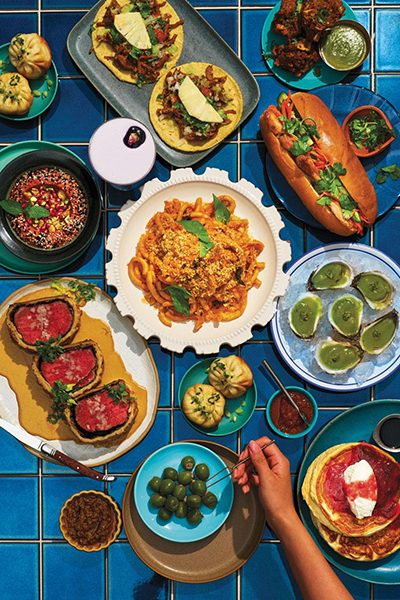

Eating out isn’t always easy on the wallet these days; even groceries are getting expensive, and hosting a dinner party isn’t cheap. The Vancouver-based gourmand, however, has a financial advantage over an inland foodie: access to fresh-caught crabs. The catch? They have to be caught.
Crabbing is one of the easiest, most accessible and most rewarding wild harvesting activities around Vancouver. It’s extremely cost effective, it can be either a social or solitary activity, and with a bit of luck there will be a delicious pile of crab meat with which to wow guests. It also happens to pair perfectly with dramatic retellings of crabbing exploits and serious West Coast bona fides.
Where to go and what to bring
To be a crabber only a trap, some bait and a license is needed. Technically, a trap isn’t even required: it is possible to dive down and pick them up from the bottom of the ocean, and some do. But a drier and more common method of crabbing is to toss a collapsible trap, which can be found at any hardware store, from a local pier.
The required license is called the B.C. Tidal Waters Sport Fishing License. It can be purchased online, and for B.C. residents, an annual license costs less than one average store-bought crab.
Anyone with a license can crab year-round. Most crabbers come out in the summertime, but that’s just because it’s nicer weather for the crabbers, not better conditions for catching crabs—in fact, many of the old timers on the piers will say that the best time to get crabs is in the colder months. Not only are they (the crabs) more frequently caught, but apparently they taste better when they’re caught in the cold. The theory is that because they’re ectothermic (the ten-dollar word for cold blooded) they become more dormant in colder temperatures, and that somehow makes the meat taste sweeter.
Traps can be tossed almost anywhere except English Bay, or between the Second Narrows Bridge and the Burrard Bridge, as the Vancouver Harbour is a busy marine transportation corridor. (That means crabbers won’t be found in Stanley Park, False Creek or, ironically, Crab Park.) Further afield, popular crabbing spots are Cates Park in North Vancouver, Belcarra Park in Coquitlam, Barnet Marine Park in Burnaby, or Iona Beach in Richmond. What all of these spots have in common is a good pier from which to toss traps into nice deep crab-infested water.
Equipment-wise, it’s advisable to bring along a bucket or cooler to store the caught crabs; a pair of fishing gloves; something to measure the catch to ensure it’s legal; and crab bait. A few snacks don’t hurt, either—crabbing is hungry work.
READ MORE: 40+ Hacks and Tricks for Making the Most of the City
How to crab off the pier
There is a bit of technique involved with using the collapsible trap, which can be observed at a busy crabbing pier, like Ambleside or Jericho. Everyone has their own style, but there are some common themes. Bait—usually chicken scraps, turkey necks or fish heads—are tied inside a porous pouch in the bullseye of the circular netted trap, which, when open, lies flat on the ground. When it’s lifted, the two halves of the circle close and dangle by a thin rope at the arc of the half circle . Then the crabber flings the trap out into the water, trailed by the rope, which is tied to the pier. The snapshot of that toss, crabber’s arm outstretched, and the trap at a zenith, is probably the most emblematic image of the act of crabbing distilled into one frame. If there were trophies given out for crabbing, that would be the position of the little humanoid sculpture at the top.
The trap then splashes into the water and sinks to the bed of the ocean, opening back up into a circle, waiting for a hungry crab to walk in.
While the trap sits at the bottom of the ocean, the crabber sits and waits, with the trap (or, at most, for the type of recreational crabbing described here, two traps) in the water. How long they wait is purely up to the individual crabber. Some wait 10 or 15 minutes. Others wait for some kind of spidey sense (crabby sense?) to urge them to pull it up. Unlike, say, a fishing rod, the trap has no way of indicating to the crabber on the pier if there’s a crab inside, so it’s purely a matter of waiting and pulling the trap up every once in a while to check if anything has scuttled inside.
For many, this waiting time is what makes the activity of crabbing worth it, regardless of any success, crab-capture wise. During this time, the crabber will reach into a cooler for a cold beverage, leisurely pace the deck of the pier, examine someone else’s catch or bait, discuss some aspect of the weather, do some serious oceanside view soaking in, change the track or volume on their music player, discuss and compare with other crabbers what kind of bait they’re using, examine their lines for wear, give their dog some water from their water bottle, kick stones or little pieces of debris down through the laths in the quay, point out what appears to be the head of a seal emerging from the ocean, open a bag of chips or do any number of mulling-around-type activities that make crabbing such a fulfilling activity.
Eventually the crab trap is pulled back up to the surface. The key here is to pull with one steady motion, arm over arm as though swimming in the air towards the trap, in order to keep the tension on the rope. That tension keeps the trap closed and the crabs interred inside.
The Pacific Northwest is home to dozens of crab species, but there are two types of good eatin’ crabs: Red Rock and Dungeness. The latter are commonly found in local restaurants and seafood stores. Flavour-wise they’re nearly indistinguishable, although Red Rocks tend to have a slightly sweeter and more concentrated taste. Dungeness are the larger of the two, and before they’re cooked, they have a brownish, purpley hue on the body of their shell, called the carapace. In order to be harvested legally, a Dungeness crab must be a male with a minimum carapace size of 165 millimeters across.
Red Rock crabs show their namesake plainly: they have a reddish shell even before they’re cooked. Although relatively smaller than Dungeness, they have much larger, rocklike pincers that are reminiscent of boxing gloves, fitting of their more aggressive nature. In order to make a crab salad out of a Red Rock crab, it only has to be 115 millimeters across the carapace. Like the Dungeness, it also has to be male.
Male and female crabs can be differentiated based on the shape of their belly. When turned upside down, does it display a narrow pillar-like lighthouse shape or a wider, more ovular shape? The lighthouse shaped ones are males. It doesn’t take long to learn the distinction at a glance.
READ MORE: Inside Jinmi Chef Jay Lee’s Pursuit of the Perfect Raw Soy-Marinated Crab
You’ve caught a crab: now what?
Once the crab has been caught, measured and sex verified, the next step is killing him. I won’t wade into the ethics of the various methods of this part of the process, except to say that the crab’s preference is for this to happen before he is eaten. Dispatching a crab is not technically difficult.
Once that’s done, cooking them is easy. A common way is to steam them for about 15 minutes. After they’re cooked, both species of crabs (and other crustaceans such as lobster and shrimp) turn bright red, like in cartoons. That’s a result of the astaxanthin-protein complex contained in their shell. Once it’s cooked, the astaxanthin dies, separating from the protein. Since the complex is a carotenoid (from the Latin carota e.g. “carrot”), it dyes the shell orange.
The next step is picking the crab, or separating the meat from the shell and cartilage. This, for many, is the most annoying and tedious part of the crab harvesting process, and for good reason. The feeling of joyful triumph at having collected, killed and cooked a regulation-size male crab soon melts away as little bits of shell and meat are finicked with. The best way to get through this part is to start thinking of what to make with all of this delicious crab meat.
One average-sized Dungeness crab will produce about a cup of meat, Red Rock slightly less. There are a lot of different dishes that can be made with that, like crab cakes, crab salad or crab pasta. But the very best way to eat it is on its own, dipped in a bit of melted butter and a crack or two of pepper.