
When a sixteen-year-old Greg Girard first documented the “exotic, adult world of downtown Vancouver” in the early ’70s, he never thought anyone would see his pictures. “It’s impossible to imagine there ever being an audience for them back then,” Girard says. Fifty years on, Girard is having his first career survey. Co-curated by Reid Shier, director of The Polygon Gallery, and curator Elliott Ramsey, the exhibition explores Girard’s work from 1972 to 2026.
Shier has known Girard’s pictures for “well over 30 years.” He thought about exhibiting his recent work while flipping through Girard’s photo books (“by far and away the biggest seller in our bookstore,” Shier notes). But on a visit to Girard’s house, Shier realized he’d never had a career survey. Fittingly, Shier and Ramsey curated this show chronologically, aiming to “share a different understanding of Greg’s practice.”
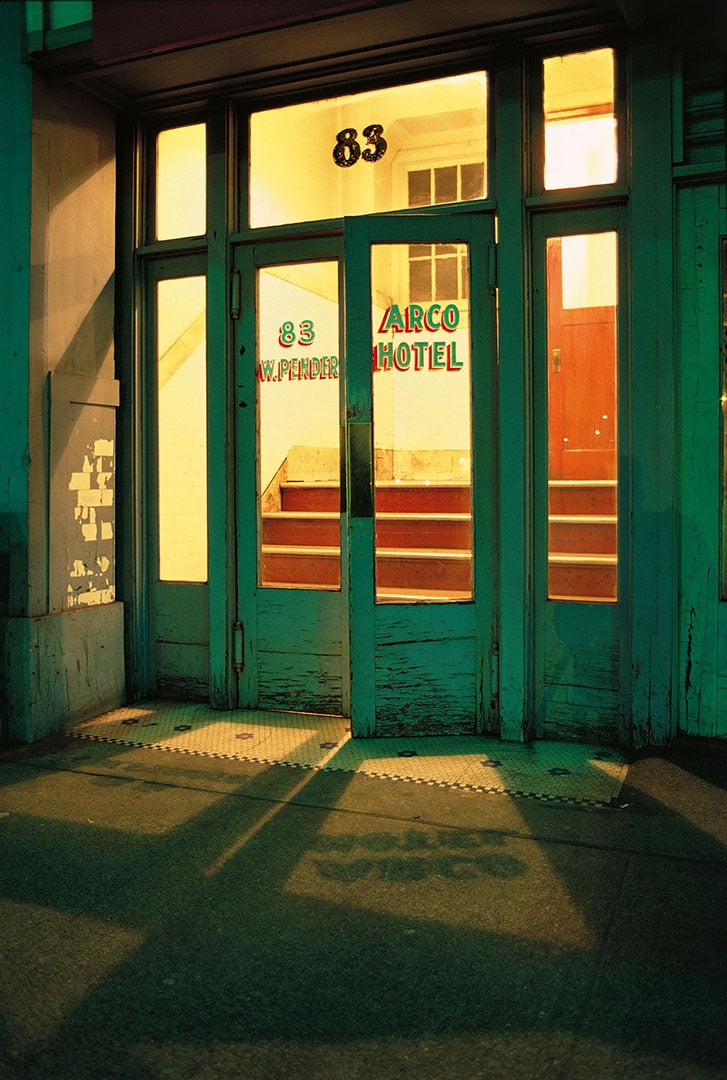
As a high schooler in Burnaby, Girard started taking pictures while staying at cheap Vancouver hotels on weekends: “That was an adventure, and eye-opening and exciting,” Girard says. After graduating, he wandered further: “I wanted to go as far away from home as I could.”
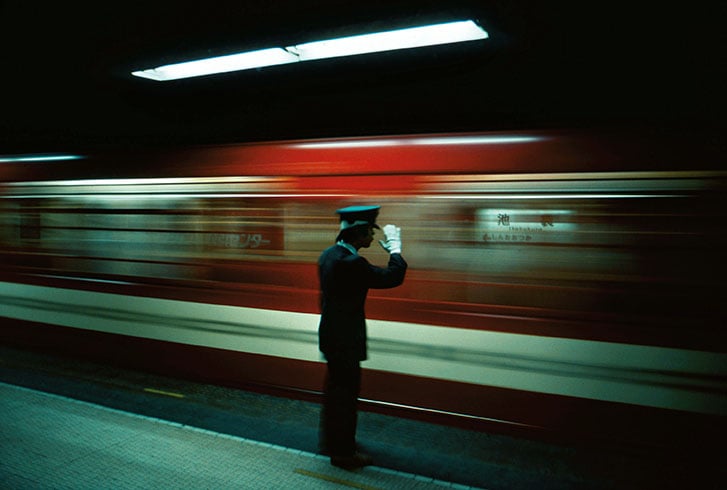
Appropriately, a photograph brought Girard to his first destination—Hong Kong. Girard describes that circa-1960s Time Life picture of the city’s harbour as having an “ordinary drama to it.” At 18, he boarded “a Philippine freighter on its last voyage from San Francisco to Manila via Hong Kong” and travelled through Southeast Asia for a year.
That trip led to more, then to a job as a staff photographer for Asiaweek, and eventually to freelancing for other magazines. His work, global in scope, is too overwhelming to summarize—a challenge the curators faced when putting the retrospective together. “As big as this show is, it only scratches the surface,” Shier says.
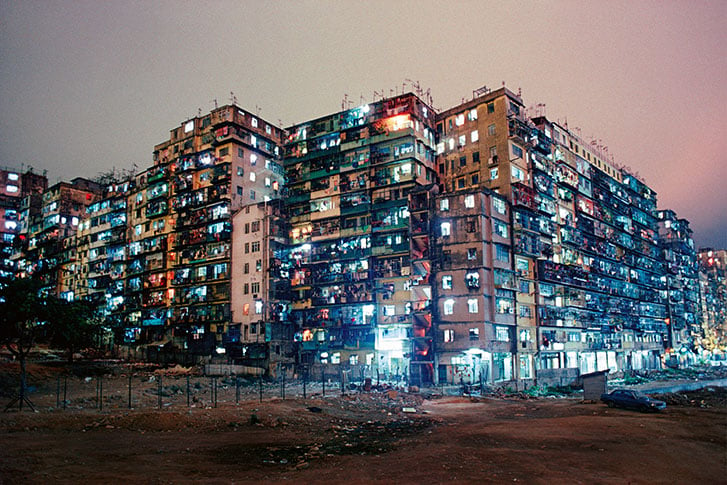
Girard is represented by Vancouver’s Monte Clark Gallery and is popular on Instagram, but is perhaps best known through his photo books. His first was City of Darkness, a collaboration with architect/photographer Ian Lambot, humanizing Hong Kong’s Kowloon Walled City. Lambot captured the architecture and Girard focused on “showing how people lived and worked,” Girard explains, “the two approaches really complemented one another.”
He has since published several more books, including Under Vancouver, Phantom Shanghai and HK:PM. In them, he seeks to uncover the visible.
“There tends to be just this hidden-in-plain-sight quality to most of my projects,” he says. Bookmaking was something he always wanted, the photographer says. “[It’s] something that still excites me quite a lot.” His latest, Greg Girard – Photographs 1972 – 2026, is the exhibition’s companion.
Shier praises Girard’s photo books (most categorized by city) but wants people to know his practice is not bound by specific geographies.
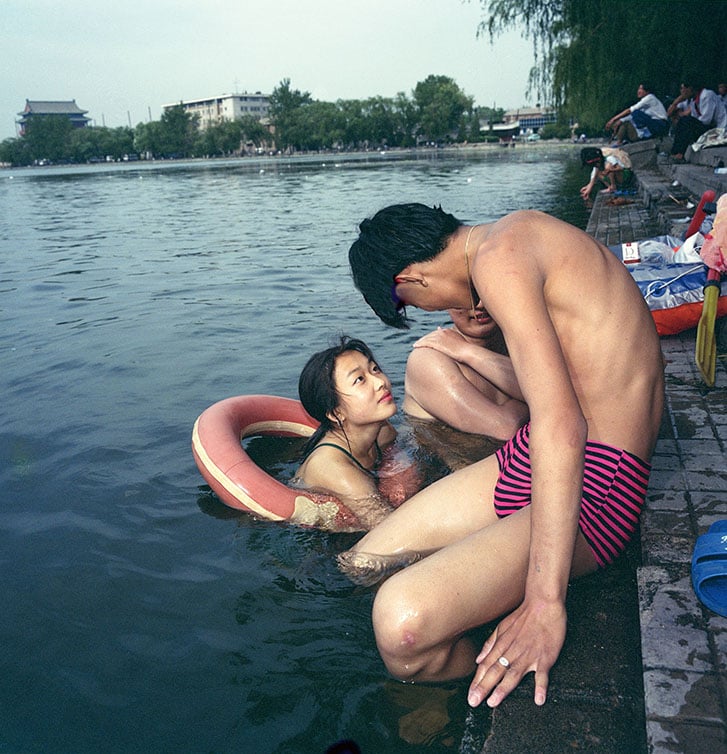
“He’s a tremendous portraitist,” Shier asserts, “it’s his ability to establish trust with people that makes for really poignant images.”
However, Girard admits he doesn’t always seek permission. “I pretty freely move back and forth between asking people and just taking pictures,” says Girard.
Often, Girard is recognized for his nighttime colour photography. From the beginning, Girard tried different film types and light sources, “discovering this unique palette that each film would have.” Then he hid the lights. “Up to that point, night pictures usually included some kind of light source in them [like streetlamps]”, Girard explains, until he “started venturing into this world where there was no light source in the picture.”
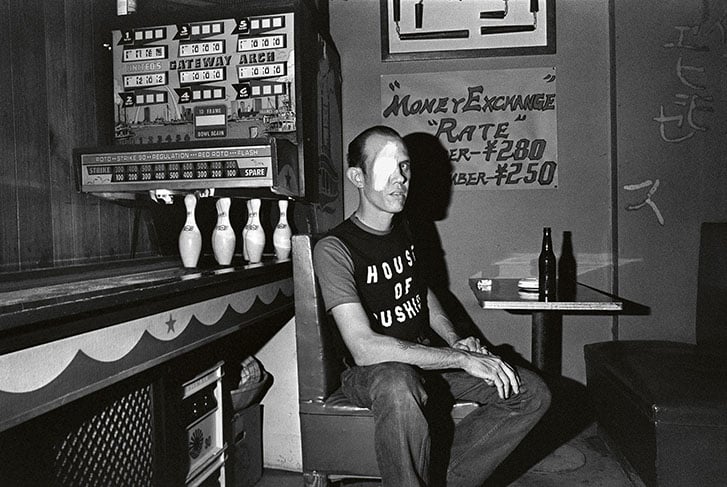
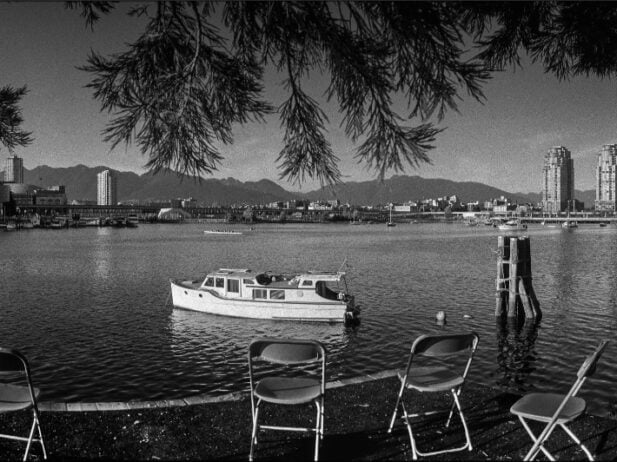
Although known for colour, Girard also shoots in black and white.
“I never differentiated in the sense of one being better than the other. I always used both.”
Shier is excited for visitors to see Girard’s black and white pictures, embodying his eye for composition and detail.
“[Girard] is vastly under-appreciated, as well known as he is,” Shier says, adding that this retrospective is, “a chance for folks to see something that’s been hiding in plain sight for a long time.”
Greg Girard’s career survey runs from July 10, 2026 to October 25, 2026.