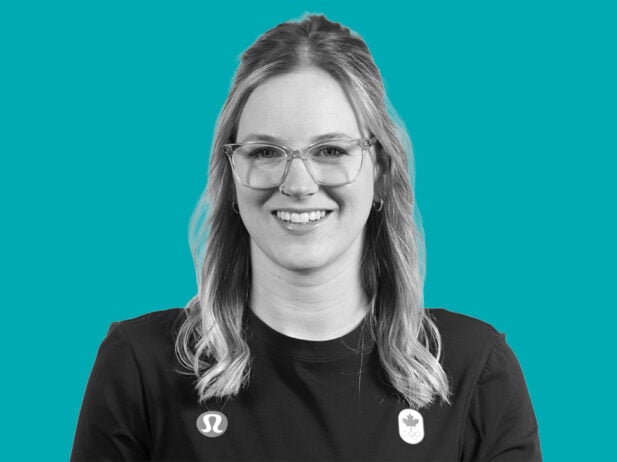

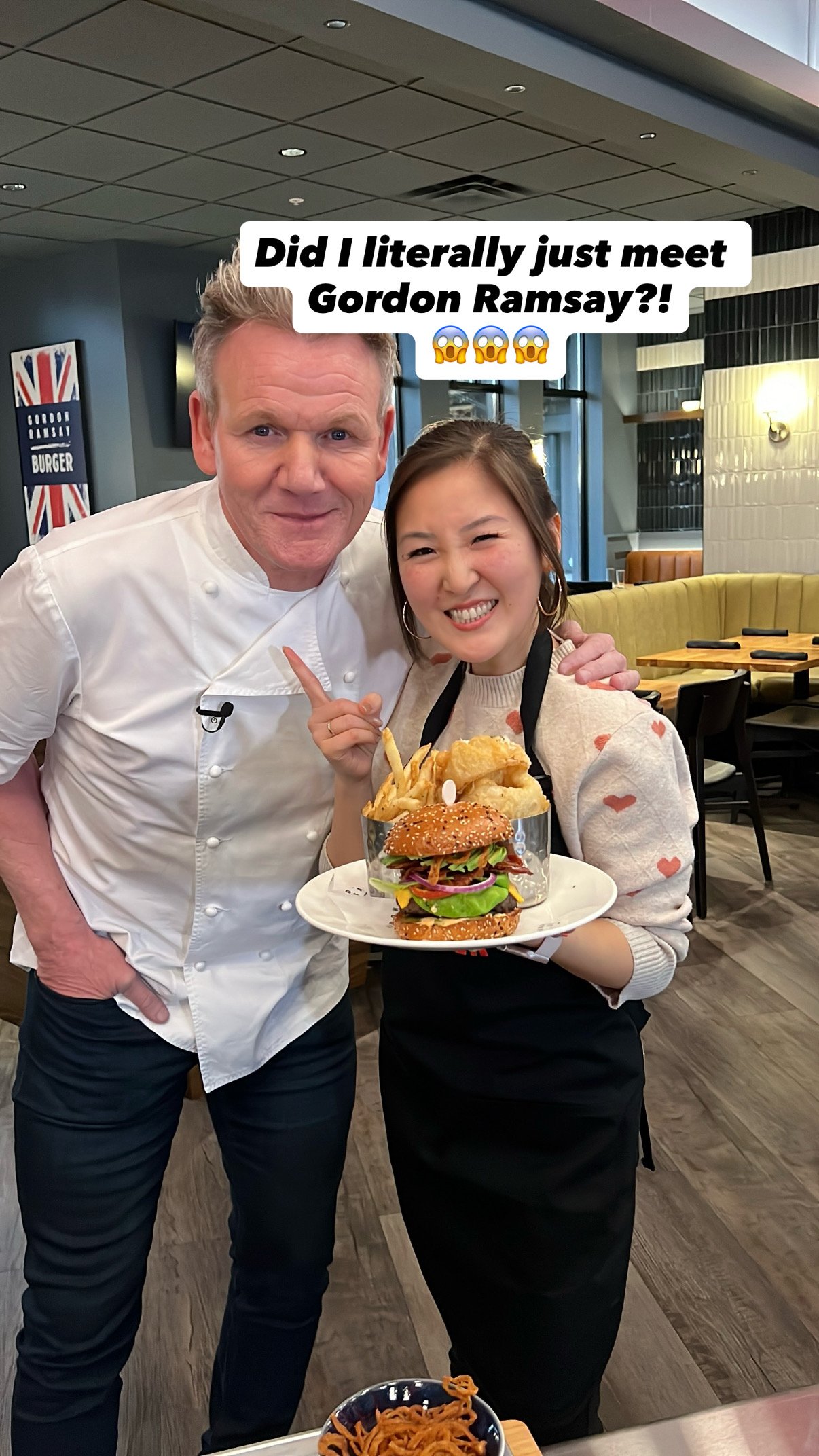
Kirby Ip hasn’t stopped posting since 2012.
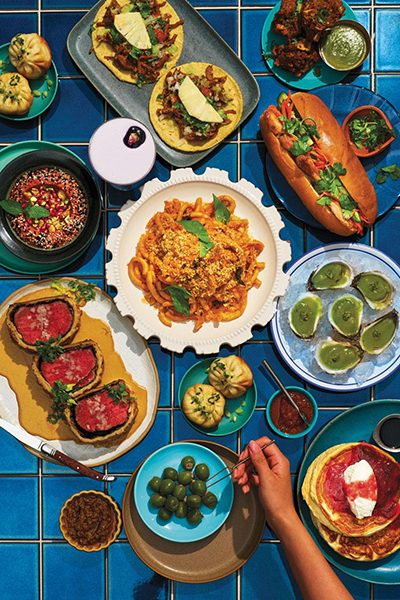
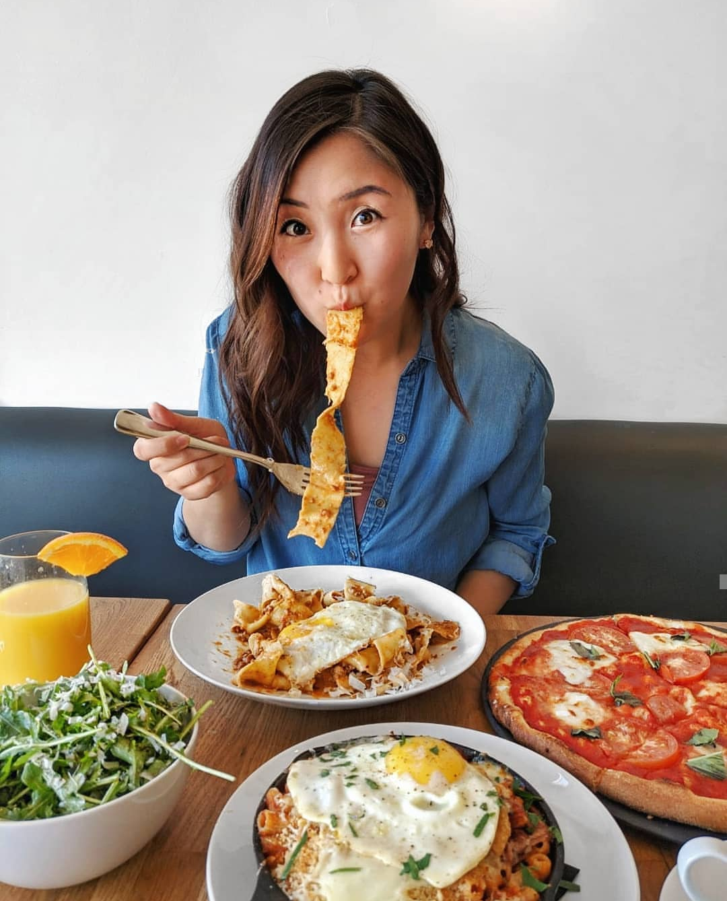
Every day for the past 14 years, the Vancouver food content creator has been feeding her 462,000 Instagram followers a steady stream of restaurant reviews, viral food trends, DIY recipes and product tests. She’s essentially a one-woman Food Network—and, since 2021, it’s been her full-time job.
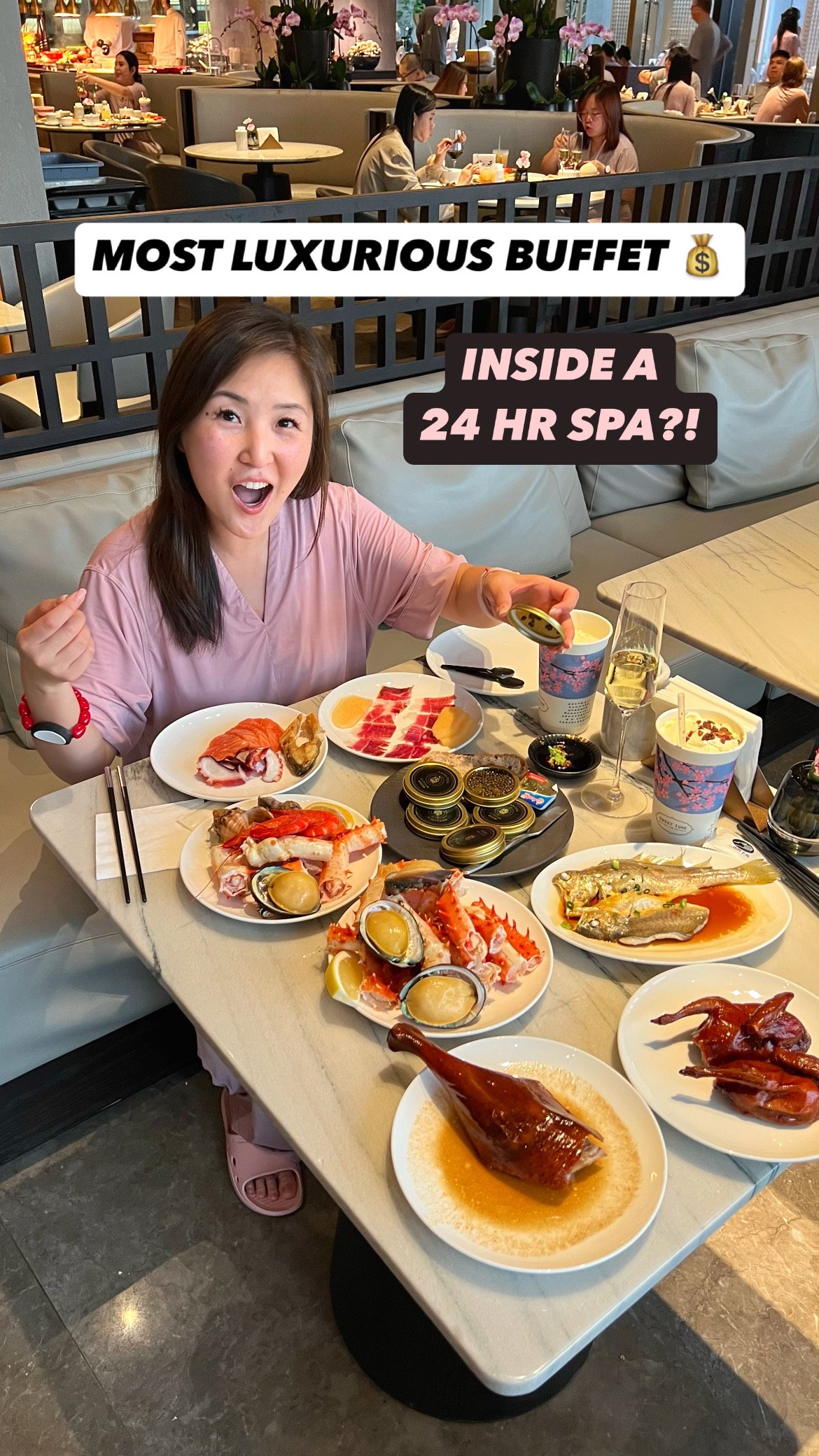
“They see it in 20 seconds, but it took eight hours of my life to create it,” says Ip (@eatingwithkirby), whose commitment to the craft has transformed her from a marketing professional at companies like Lululemon and Microsoft into one of Vancouver’s most successful influencers. Her husband covered her half of the mortgage as she got started; now, he works for her behind the scenes, handling bookkeeping, reporting and subcontractor management so she can focus on content. “I was his investment,” she jokes.
The 20-Second Video, the Eight-Hour Workday
Ip is part of an invisible economy thriving in Vancouver’s shadows. While the city’s film and television industry employs around 90,000 people in a given year (says CreativeBC) and has earned Vancouver the nickname Hollywood North, content creators remain decentralized, independent and regularly misunderstood by older generations. Yet, according to Nielsen Canada, there are over 882,000 active influencers across the country on major platforms. If Vancouver has perhaps 10 percent of that base—a plausible estimate given the city’s size, creative economy and media industry—that’s roughly 88,000 people building careers from their phones.
Vancouver’s Creator Economy Is Hiding in Plain Sight
Collectively, they’re capturing a significant share of the approximately $920 million spent on influencer marketing in Canada in 2024, according to Statista—even as broadcast television advertising continues a decade-long plummet. As legacy broadcast media struggles to stay afloat (last year saw the closure of 14 TV stations across Canada), these creators are building an ecosystem of new, individually run media networks that are leaner and more lucrative.
Those who join its ranks, though, are often doing so by accident.
Most Creators Didn’t Plan to Be Creators
The common thread among Vancouver’s most successful content creators is the organic nature of their rise. They posted about things they loved—a great meal, a cool coffee shop, a fun hike—and attracted an authentic, engaged audience that clamoured for more. Not everyone sets out with the dream to be a content creator: content creatordom is often thrust upon them.
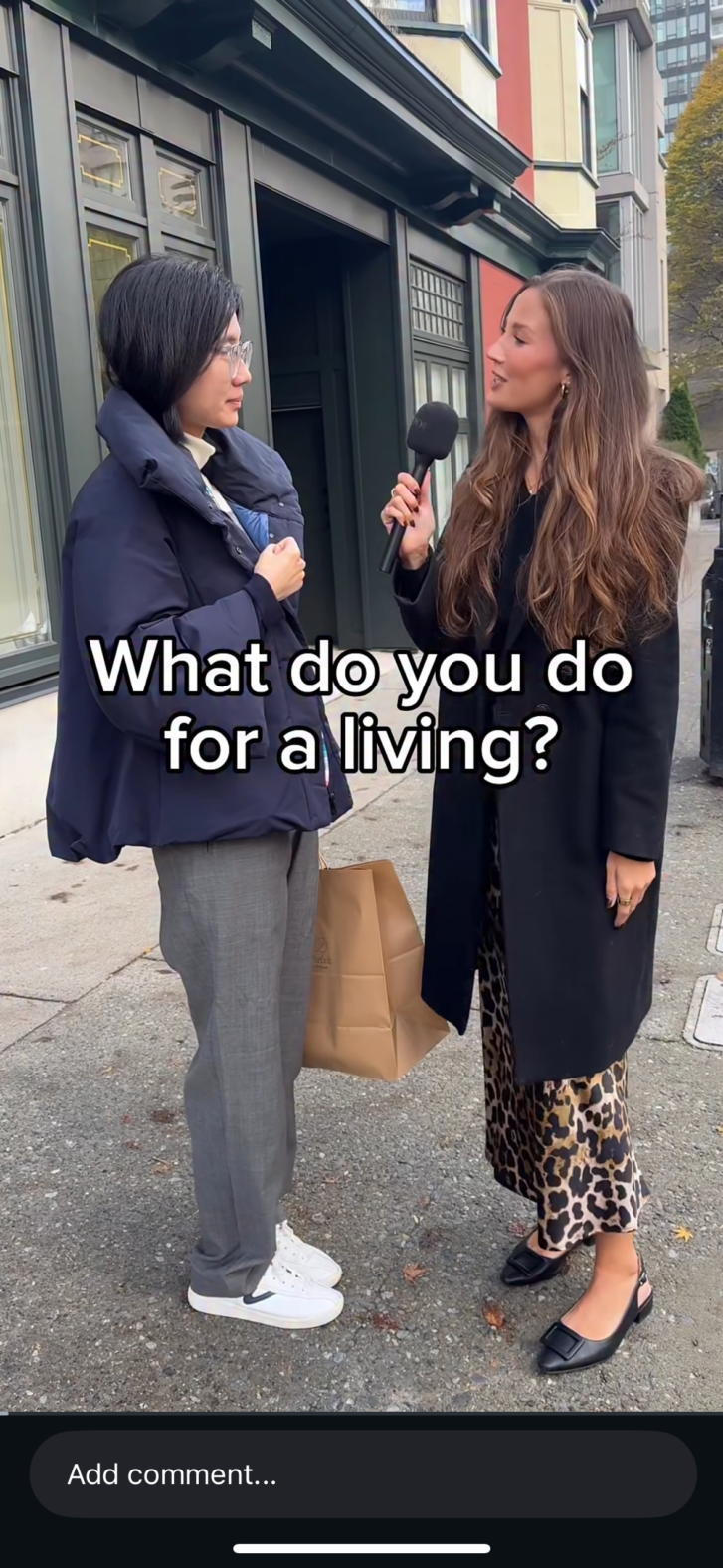
Daniella Atkinson Turned a Side Project Into a Salary
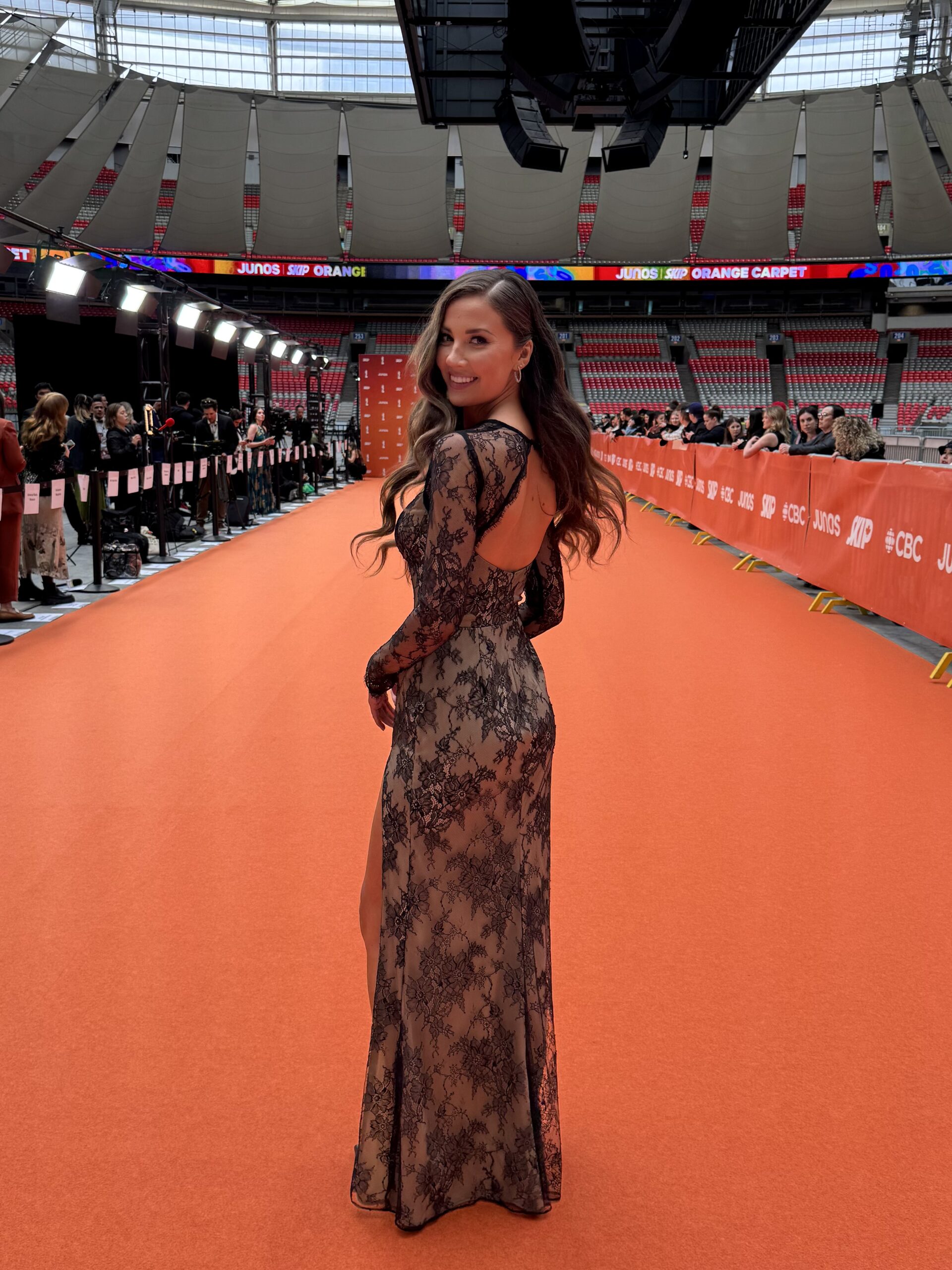
Daniella Atkinson—known to her 138,000 Instagram followers as @daniella_atk, or “Vancouver’s News Reporter”—started as an on-air reporter for the Market Herald. Her 5 a.m. call times left her with afternoon hours to kill; just for fun, she began doing street interviews on social media, asking people about salary transparency. “I had no idea what anyone in the reporting industry made, and then realized that no one made as much money as I wanted to,” she says. “I don’t want to get up in the middle of the night to maybe make $90K in 20 years.” When her top video hit 19 million views and her bosses didn’t care, she decided to bring her audience to companies that would. She gave her notice in January 2023; in 2024, she brought in $175,000 from partnerships and brand deals.
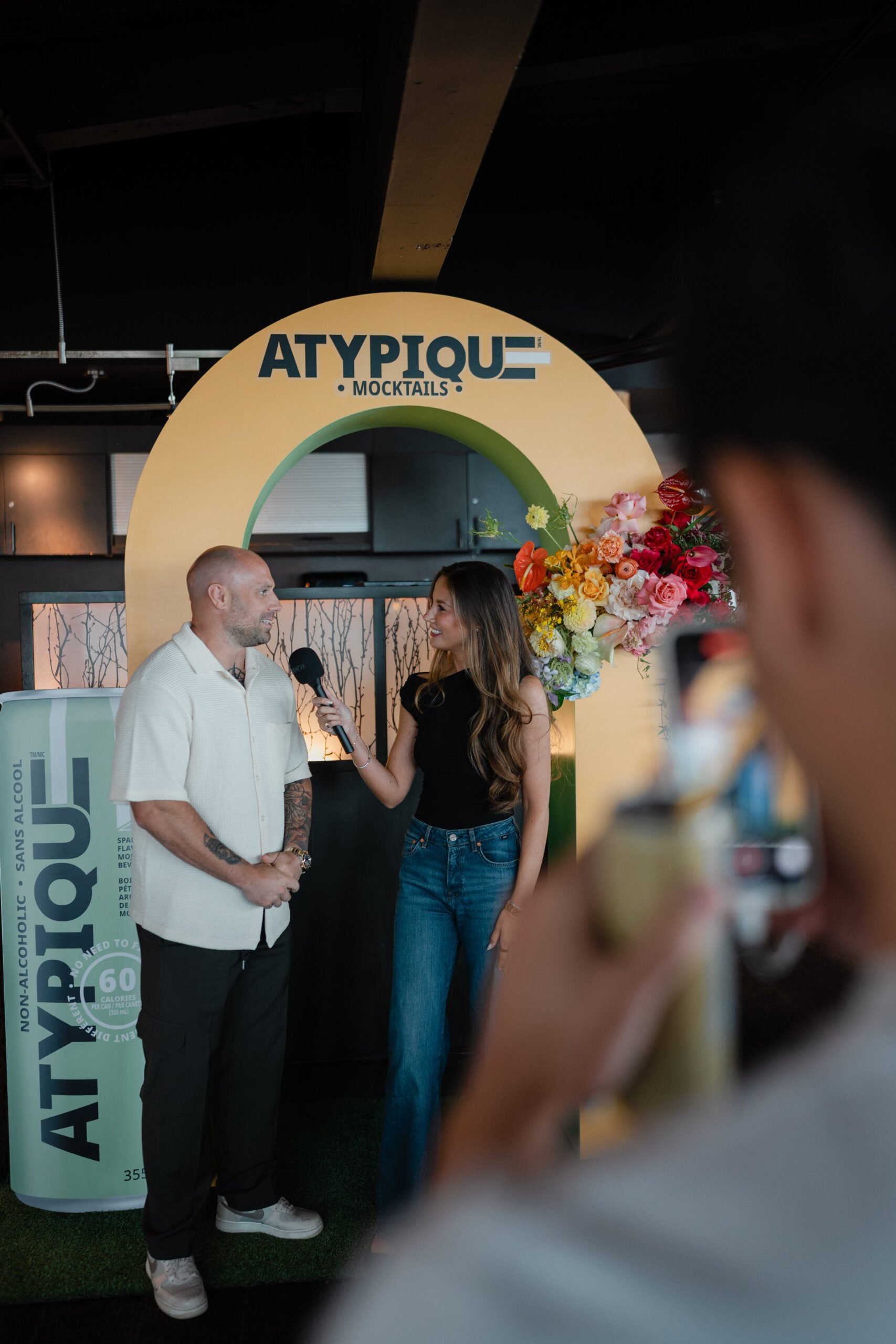
Atkinson is aware, of course, of the precariousness of self-employment. “Every day I’m like, this could end in two seconds,” she admits. But in the meantime, she’s making the most of it—as a correspondent with the Junos, a partner for Tim Hortons and Subway and an ambassador for the Shangri-La. These are all opportunities she’s brokered herself, without a manager.
READ MORE: Home Tour: Inside Content Creators Nina Huynh and Dejan Stanić’s Thrift-Filled Home
Going Solo, Knowing It Could Vanish
Ben Kielesinski and the Pandemic Plot Twist
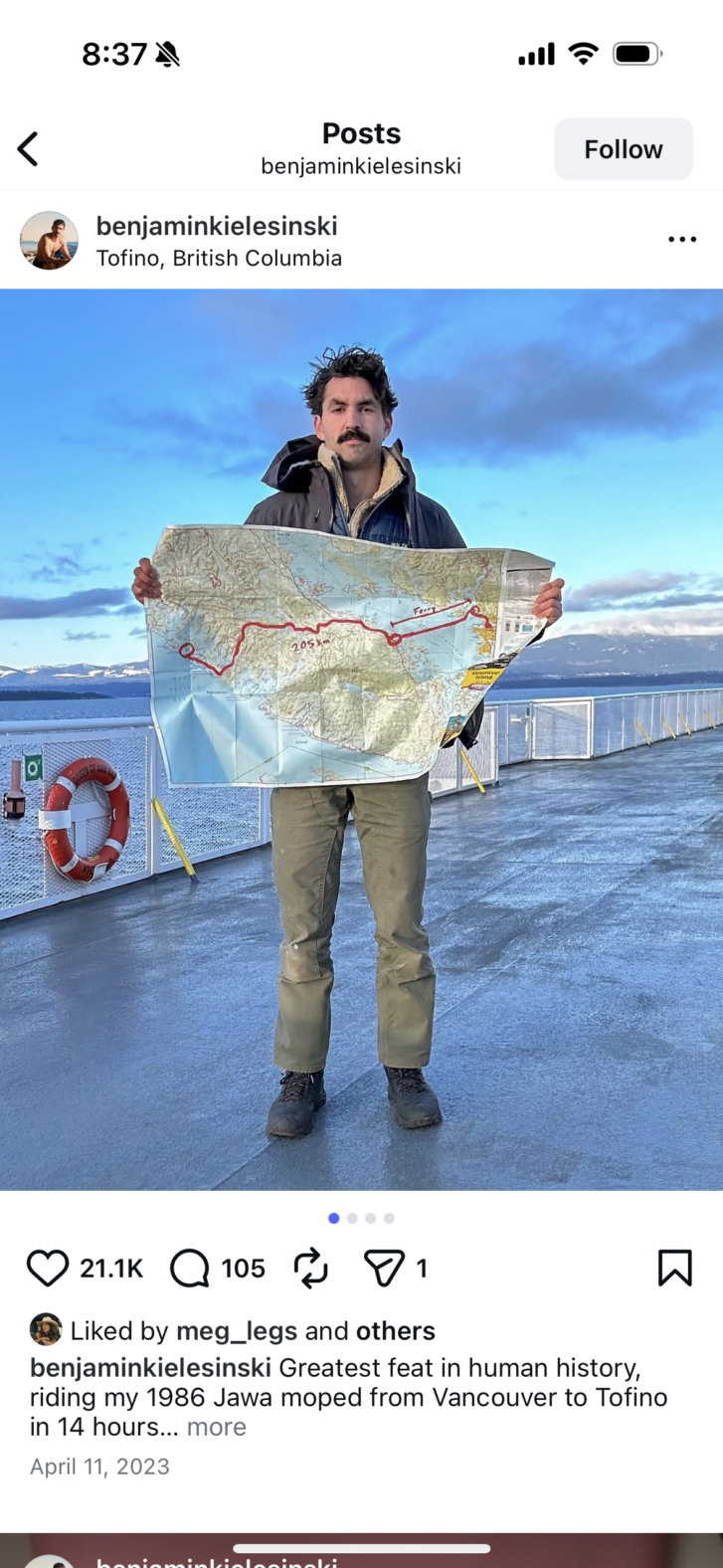
Ben Kielesinski’s journey was even more serendipitous. He was working for his family’s events company in Cloverdale, but was laid off by his own dad when COVID hit. “No favouritism there,” he jokes. With the city shut down and nothing to do, he started spending time outdoors. When a friend mentioned that an agency was casting remotely for a wilderness commercial, he edited a video on TikTok—purely because it was a free editing tool—and submitted it. He didn’t get the commercial, but the video got 10,000 views.
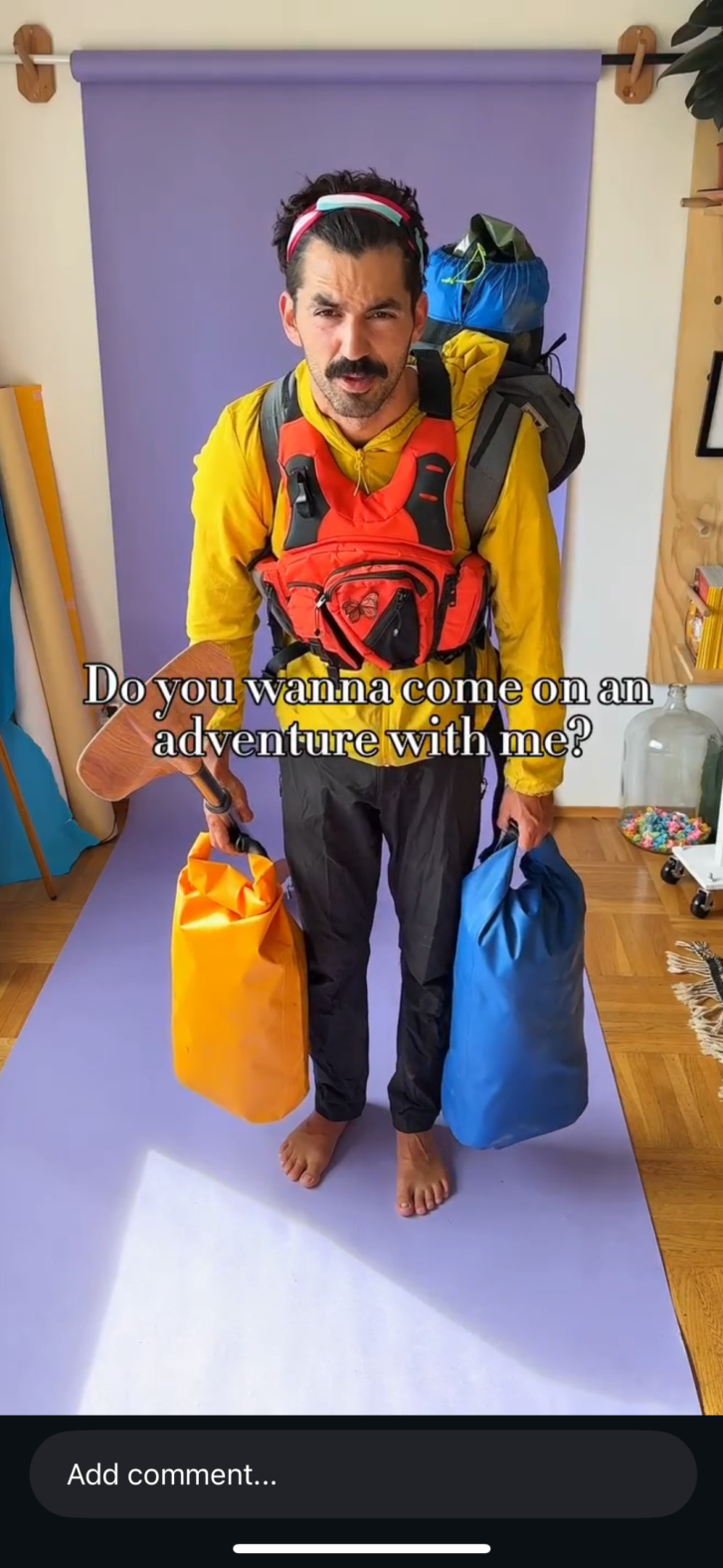
“All the comments were so positive, like: ‘I can’t wait to get back to B.C.,’ or ‘I’m stuck inside and this is so cool to see,’” he says. He started posting more nature content to his @benjaminkielesinski account, usually beginning with “Do you want to come on an adventure with me?” A January 2022 video got a million views in six hours. Today, Kielesinski has 2.7 million followers on TikTok and 510,000 on Instagram. He never went back to work with Dad.
“Do You Want to Come on an Adventure With Me?”
Like with any creative freelance job, there’s a surprising amount of unpleasant administration involved in following your passion. It’s not enough to just be a great on-camera personality or skilled video editor—you also need to be your own bookkeeper, marketer, agent, project manager and salesperson.
Sam Learns the Contract Stuff the Hard Way
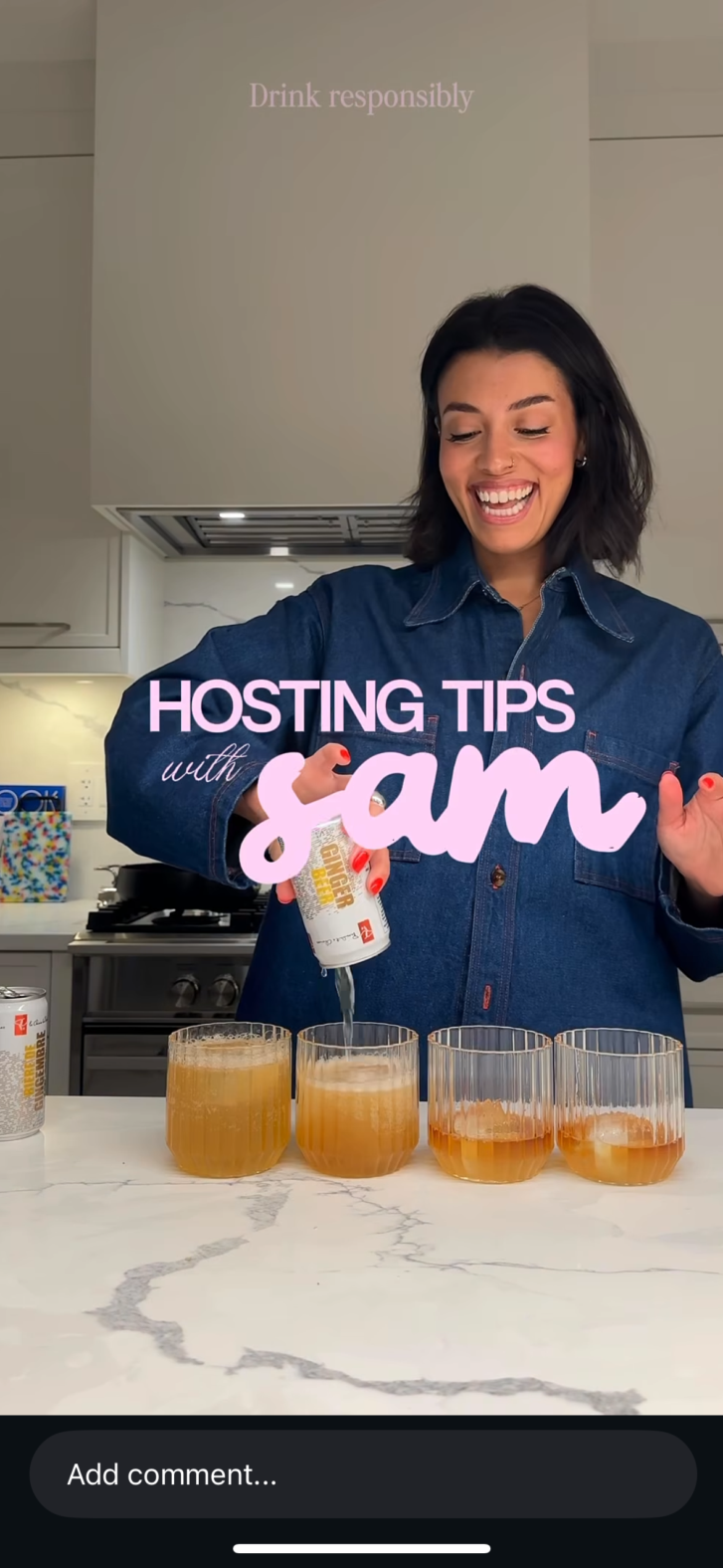
Sam, who prefers to keep her last name private despite sharing her life with 57,000 Instagram followers, learned this the hard way. A former elementary school teacher, she was working for an ed-tech startup when layoffs hit in May 2024. “I was shocked and sad, but then immediately I was like: This is not even a question. I’m going to do this full-time.” She’d been running a personal account, @omgheysam, to share Vancouver’s hidden gems and hot spots in other destinations, and she felt momentum building. By August of that year, she hit five figures in brand deals. But the learning curve was steep. “Actually understanding a 20-page contract, knowing what to charge, negotiating contracts—it’s a challenge that I wasn’t really prepared for,” she says. “If you’re used to a paycheque every two weeks, this is a whole new world.” She credits the transparency of fellow creators for helping her navigate those early days: she often DMed other women to ask about rates. “They were like, ‘Sam, honestly, we don’t really know either, but here’s a ballpark.’ It helped so much.”
The challenges extend beyond contracts. As Sam notes, there are countless variables in every deal: “It’s not just about the video, it’s also like: Does the company want usage rights? Do they want exclusivity? Do they want Stories? There are so many pieces of the puzzle.”
The Unsexy Work: Contracts, Rates and Chasing Payments
Atkinson has faced her own frustrations with the business side. “Companies sometimes take advantage, knowing you’re a single person trying to chase down payments. I’ve had clients be eight months late on big payments.”
But perhaps no challenge looms larger than the capricious nature of platform algorithms. Ip experienced this firsthand after taking a cruise without wifi—her first real vacation in 15 years. She was offline for 10 whole days. When she returned, her posts struggled to get reach. “I was penalized,” she says—punished by Instagram’s algorithm for daring to log off.
It’s this reality that makes the work feel like a “hamster wheel” at times, as Ip describes it. The benefits are obvious—flexibility, autonomy, high earning potential—but the invisible work is enormous. “It’s 24/7 but it’s 24/7 that I enjoy. There are no office hours,” says Atkinson. “It’s not something you can do unless you’re fully passionate about it.”
View this post on Instagram
The Algorithm Problem
Despite Vancouver’s smaller market compared to major hubs like New York, L.A. or Toronto, many creators are content to stay. Ip knows she could make more money in the States and feels the pressure sometimes—she could get a big talent management company, meet clients in person—but the quality of life available here matters. “I like how all the things we love are here, and how safe it is here. I won’t be moving just for that.”
Atkinson echoes this sentiment. “I always get asked ‘would you move to L.A.,’ but I always say I’d rather be a big fish in a small pond.” While other cities might offer more branded events and opportunities, that comes with different headaches and competition. “We’ve got our own niche here, and Vancouver is catching up. Big brands are starting to do activations here.”
View this post on Instagram
Why They Stay in Vancouver Anyway
Ip has met other content creators in Vancouver who make half a million a year, but she says most influencers here feel like they’re not reaching their full earning potential. “We’re definitely a small-potato city,” she says. Still, she’s not complaining. Neither is Kielesinski: “I’m not going to say it’s hard. If you’re working in the service industry, that’s hard. I get to spend most of my time doing something I love and I feel so lucky.”
Atkinson estimates there are 30 or so content creators she sees consistently at local events. “We’re pretty close knit,” she says. Ip, however, notes a more mixed dynamic: “It’s both competitive, and a community. I’ve met some amazing people but there’s a competitive aura among certain creators in my niche. I can think of five people or less I can speak to openly about this work. It can be lonely.”
Tom Yawney is a co-founder of the Influence Agency, a Canadian agency that connects content creators with brands. Based in Toronto but working with influencers worldwide, he’s witnessed the astronomical rise of influencer marketing over the last decade. “In 2017, influencer marketing was pretty underdeveloped in Canada compared to the U.S. We’d meet with people eight years ago, and it was a foreign concept. They’d be like, ‘What are you talking about? What is this? Why would we do this?’”
Today, it’s standard practice. The biggest change, Yawney notes, is the shift from broad reach to niche categories that “fill in all the crevices of the internet.” Brands no longer just want a mom with a big following—they want a mom specifically making content for parents raising gymnast kids with food allergies. He might connect brands with a bundle of smaller influencers—25 creators with 4,000 highly engaged followers each instead of one creator with 100,000.
View this post on Instagram
A New Media Ecosystem With Old Rules Still Lurking
Vancouver-based PR firm Armstrong and Lan Communications has seen similar evolution. The team typically balances traditional media and influencers, depending on client objectives, but, says co-principal Tara Armstrong, “Content creators have become an essential extension of how we tell stories and reach audiences.” The focus of the firm has shifted from follower count to “engagement, audience quality, content style and long-term impact,” Armstrong notes.
“Our clients still see traditional media coverage as incredibly valuable—it carries a sense of credibility and permanence that’s hard to replicate elsewhere,” says Armstrong’s partner, Michelle Lan. “However, the rise of social media has shifted expectations. Brands appreciate the direct-to-consumer aspect, the ability to see immediate reactions, comments and measurable engagement.”
For most creators, the journey starts with in-kind opportunities—$500 worth of makeup, an invitation to try a restaurant. As follower numbers creep up (Yawney says 10,000 is the sweet spot), modest financial offers tend to follow. “People get stuck for a period of time in this middle ground,” says Yawney. They’re not businesspeople, they’ve never negotiated a contract. But once you break through to the next level—or develop enough business acumen—there’s opportunity for six- or seven-figure deals.”
While many of the content creators interviewed for this story said that living in Vancouver limits their opportunities, Yawney disagrees that physical location can hinder an influencer’s success. “There are huge content creators in Australia, in Abu Dhabi, in Romania—there are people all over the world that are developing huge audiences. Social media has broken down the doors set up by traditional media gatekeepers, and it’s a bridge that anyone can cross.”
The most successful creators guard their authenticity fiercely. Kielesinski is picky about partnerships, saying no to most offers his manager brings. “It’s my face, my name. I want to choose partnerships that feel true,” he says. He’s particular about the cases where he’ll use his “come on an adventure” tagline for paid promotions. “My audience hears that and think they’re getting a treat; I use it responsibly.”
View this post on Instagram
You Can’t Apply for This Life
People reach out to Yawney weekly saying they want to become an influencer. “And I have to tell them: This isn’t how it works. It’s not a job you apply for.” So many people who build careers around content creation arrived there through circumstance: doing something they had an interest in, building it consistently and watching as community follows.
It’s the kind of career that requires total immersion. Sam works around the clock, but she sees that as a universal experience for entrepreneurs of any kind, especially in the early days. “If you’re in your first few years of running a business, I think it has to be that way, you know?”
The work may be all-consuming, potentially harmful to relationships and family life. But for those who’ve found their niche, posting about the things they love to audiences who love them back, it beats getting up at 5 a.m. to maybe earn $90K 20 years from now.
Even if it means the algorithm is always watching, waiting for you to take a vacation.